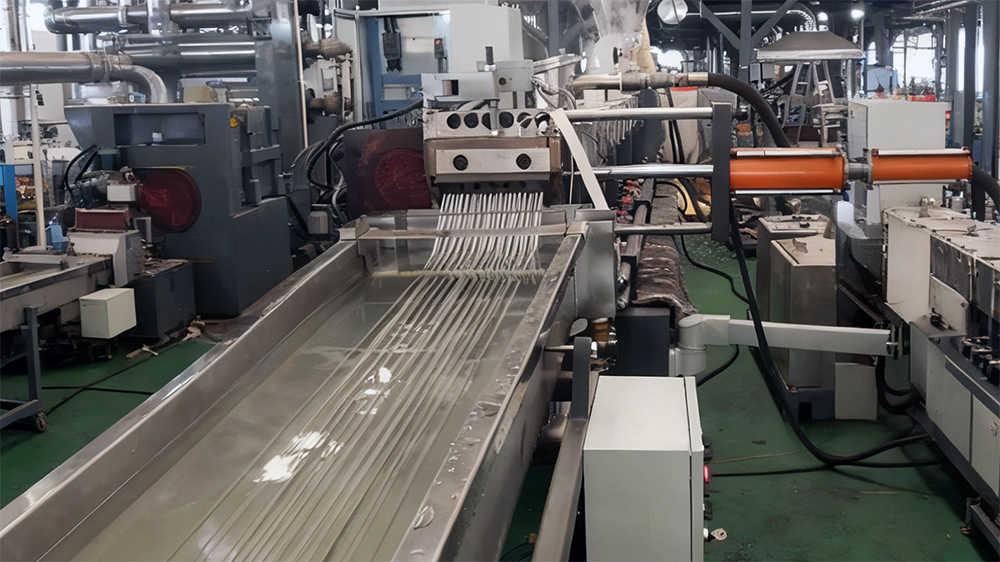
Permanent Antistatic Agent

What Is Surface Resistivity? What Do 10⁶, 10⁸, 10¹⁰ and 10¹² Ω Mean?

Surface resistivity is one of the most important electrical properties used to evaluate antistatic and static-control plastics. When selecting an antistatic additive, customers often specify a target value such as 10⁶ Ω, 10⁸ Ω or 10¹⁰ Ω. But what do these numbers actually mean? Does a lower value always indicate better antistatic performance? To understand

What Is Surface Resistivity? What Do 10⁶, 10⁸, 10¹⁰ and 10¹² Ω Mean? Read More »
How to Select Permanent Antistatic Additives for Different Plastics: PP, PE, ABS, PC, and PA

Introduction Permanent antistatic additives are used in plastics to help control static charge buildup in applications such as electronic components, industrial parts, packaging, and plastic housings. However, there is no universal antistatic additive that automatically works equally well in every plastic. Polypropylene (PP), polyethylene (PE), acrylonitrile butadiene styrene (ABS), polycarbonate (PC), and polyamide (PA) have

How to Select Permanent Antistatic Additives for Different Plastics: PP, PE, ABS, PC, and PA Read More »

Antistatic Additives for PA: PA6 vs. PA66 and the Role of Moisture in Antistatic Performance

Introduction Polyamide (PA), commonly known as nylon, is widely used in engineering plastics, electrical components, automotive parts, industrial equipment, and electronic applications. Two common grades are PA6 and PA66. Both offer useful mechanical properties, but they differ in their molecular structure, melting behavior, processing requirements, and moisture absorption characteristics. When developing an antistatic formulation for

Antistatic Additives for PA: PA6 vs. PA66 and the Role of Moisture in Antistatic Performance Read More »

Antistatic Additives for PET: Key Differences Between PET Films and Injection-Molded Products

Introduction Polyethylene terephthalate (PET) is widely used in packaging films, electronic materials, industrial components, fibers, sheets, and molded products. However, PET products can accumulate static charges during processing, winding, unwinding, conveying, packaging, and handling. Depending on the application, static electricity may attract dust, cause films to stick together, interfere with material handling, or create electrostatic

Antistatic Additives for PET: Key Differences Between PET Films and Injection-Molded Products Read More »

Antistatic Additives for PC: Achieving Permanent Antistatic Performance Without Sacrificing Impact Strength

Introduction Polycarbonate (PC) is an engineering thermoplastic widely used in electrical housings, electronic components, industrial equipment, optical applications, and other products requiring a combination of mechanical strength, heat resistance, and dimensional stability. However, PC can accumulate static charges during processing, handling, and use. Depending on the application, this may lead to dust attraction, handling difficulties,

Antistatic Additives for PC: Achieving Permanent Antistatic Performance Without Sacrificing Impact Strength Read More »

Antistatic Additives for ABS and PC/ABS: Compatibility, Processing Challenges and Selection Factors

Introduction Acrylonitrile butadiene styrene (ABS) and polycarbonate/ABS blends (PC/ABS) are widely used in electrical housings, electronic equipment, automotive components, industrial enclosures, and other engineered plastic products. However, these materials can accumulate static charges during manufacturing, handling, and use. Depending on the application, static electricity may attract dust, interfere with sensitive components, or create electrostatic discharge

Antistatic Additives for ABS and PC/ABS: Compatibility, Processing Challenges and Selection Factors Read More »

Antistatic Agents for PP and PE: Key Differences, Selection Factors and Common Challenges

Introduction Polypropylene (PP) and polyethylene (PE) are two of the most widely used thermoplastics in the plastics industry. They are commonly found in packaging, films, injection-molded products, containers, and industrial plastic components. However, both PP and PE have relatively low electrical conductivity and can accumulate static charges during processing, handling, and use. Antistatic agents can

Antistatic Agents for PP and PE: Key Differences, Selection Factors and Common Challenges Read More »

A Guide to Antistatic Agents: Types, Mechanisms and Applications

Introduction Static electricity is a common challenge in plastics, textiles, packaging, electronics, and many other industries. It can cause dust attraction, material sticking, handling difficulties, and, in certain environments, electrostatic discharge (ESD) risks. Antistatic agents are used to reduce the buildup or accumulation of static charges. However, not all antistatic agents work in the same

A Guide to Antistatic Agents: Types, Mechanisms and Applications Read More »

Short-Term vs. Permanent Antistatic Additives in Plastic Compounding

For experienced plastic compounders, small-molecule antistatic agents such as glycerol monostearate (GMS), fatty acid amides, and ethoxylated amines are familiar materials. More than a decade ago, adding 3–5% of these additives could quickly reduce surface resistivity to approximately 10¹⁰ Ω in certain formulations. They offered a relatively low-cost way to achieve antistatic performance. However, market

Short-Term vs. Permanent Antistatic Additives in Plastic Compounding Read More »

Why Is Permanent Antistatic Modification of Natural-Color PC More Difficult Than ABS?

Introduction During discussions with customers, we frequently hear that achieving permanent antistatic performance in natural-color PC (polycarbonate) is more challenging than in natural-color ABS. Some customers have also reported difficulties during modification with domestically produced permanent antistatic masterbatches, including problems with strand extrusion and pelletizing. Although PC and ABS are both widely used engineering plastics,

Why Is Permanent Antistatic Modification of Natural-Color PC More Difficult Than ABS? Read More »

Product Enquiry