
Introduction
Permanent antistatic additives are used in plastics to help control static charge buildup in applications such as electronic components, industrial parts, packaging, and plastic housings.
However, there is no universal antistatic additive that automatically works equally well in every plastic.
Polypropylene (PP), polyethylene (PE), acrylonitrile butadiene styrene (ABS), polycarbonate (PC), and polyamide (PA) have different molecular structures, processing requirements, and performance characteristics.
An additive that performs well in one polymer may produce different results in another. Compatibility, dispersion, processing temperature, mechanical properties, appearance, and electrical performance must all be considered.
This article explains the key factors involved in selecting permanent antistatic additives for different plastic materials.
1. Why Can’t One Antistatic Additive Be Used for Every Plastic?
The performance of an antistatic additive depends on how it interacts with the host polymer.
Different plastics have different chemical structures, melt characteristics, and processing conditions. These differences can affect how an additive disperses, how the blend behaves during processing, and whether the finished product meets the required electrical and mechanical specifications.
The main factors include:
- Compatibility between the additive and the base resin
- Additive dispersion and distribution
- Processing temperature and thermal stability
- Melt flow and processing behavior
- Mechanical properties
- Color, transparency, and surface appearance
- Required electrical performance and durability
For this reason, an additive developed for PP or PE should not automatically be recommended for ABS, PC, or PA without technical verification.
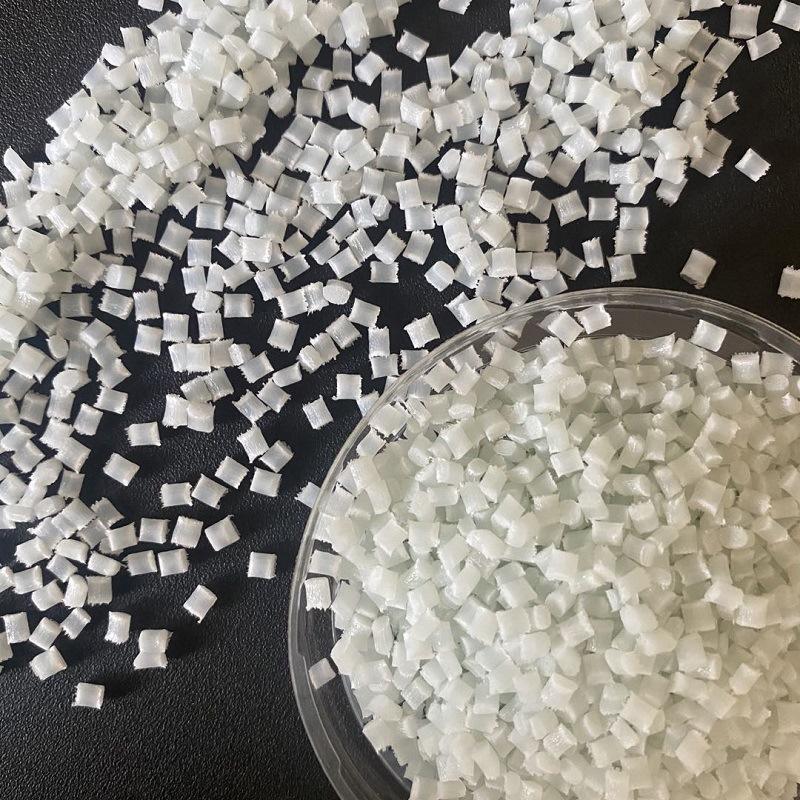
2. Antistatic Additives for PP and PE
PP and PE are polyolefins widely used in packaging, films, containers, household products, and industrial components.
Although they belong to the same broad polymer family, they are not identical.
PP Applications
PP is commonly used in injection-molded products, household components, automotive parts, and industrial applications.
When selecting an antistatic additive for PP, consider:
- Compatibility with the specific PP grade
- Injection molding or extrusion conditions
- Impact strength and stiffness
- Color and surface appearance
- Required electrical performance
PE Applications
PE is widely used in films, packaging, containers, and other flexible or rigid products.
Important considerations may include:
- Film or molded-product requirements
- Film stretching, winding, and handling behavior
- Mechanical flexibility and toughness
- Surface appearance and downstream processing
- Electrical performance under actual use conditions
Some antistatic additives may be suitable for both PP and PE, but the required loading level and final performance must be confirmed for each formulation.
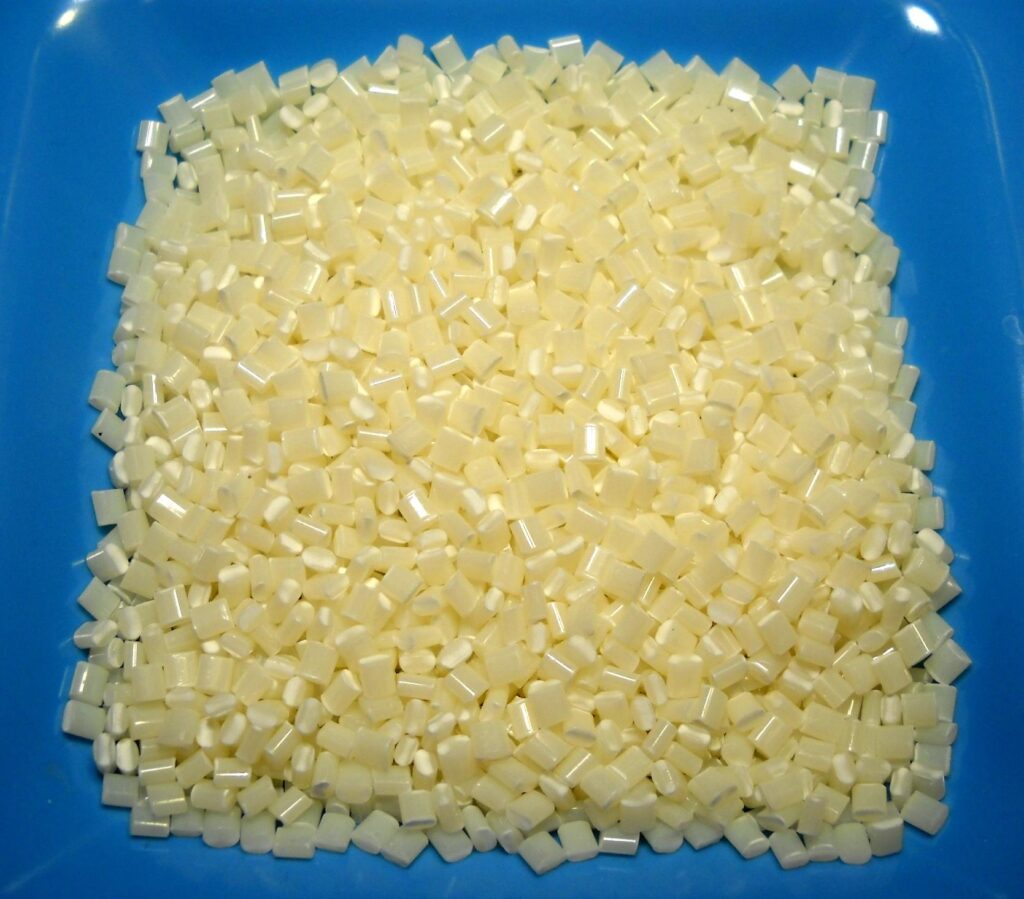
3. Antistatic Additives for ABS
ABS is widely used in electronic housings, appliance components, automotive interiors, and industrial parts.
When developing an antistatic ABS formulation, the additive must be compatible with the specific resin and processing conditions.
Important selection factors include:
- Electrical performance
- Impact strength and stiffness
- Processing stability
- Color and surface quality
- Compatibility with other modifiers or flame retardants, where relevant
For natural-color or light-colored ABS, the additive’s inherent color and its effect on the finished surface may be important.
If the application requires both antistatic and flame-retardant performance, the complete formulation must be evaluated for compatibility and processing behavior.
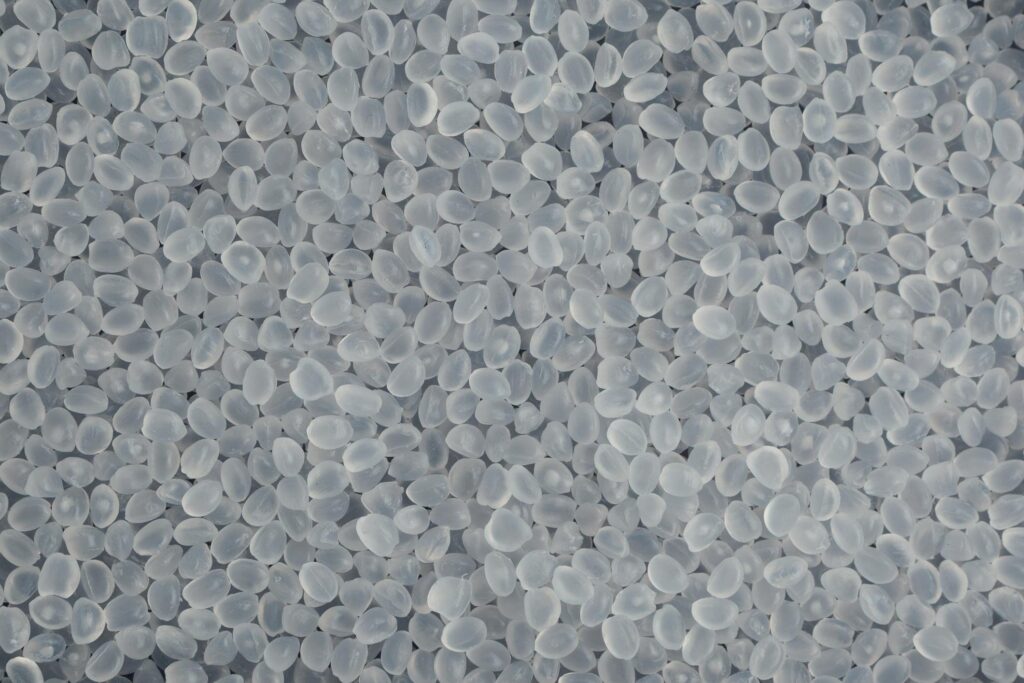
4. Antistatic Additives for PC
PC is an engineering thermoplastic used in electrical components, electronic housings, industrial equipment, and applications requiring suitable mechanical and thermal performance.
Selecting an antistatic additive for PC can be challenging because the formulation must maintain the properties required by the finished product.
Key considerations include:
- Compatibility with the specific PC grade
- Thermal stability during compounding and molding
- Appropriate resin drying and moisture control
- Mechanical properties
- Processing stability
- Color, transparency, and surface appearance
Natural-color and transparent PC applications may require especially careful control of color changes, haze, and surface defects.
An additive that works in ABS or PP should not be assumed to perform equally well in PC.
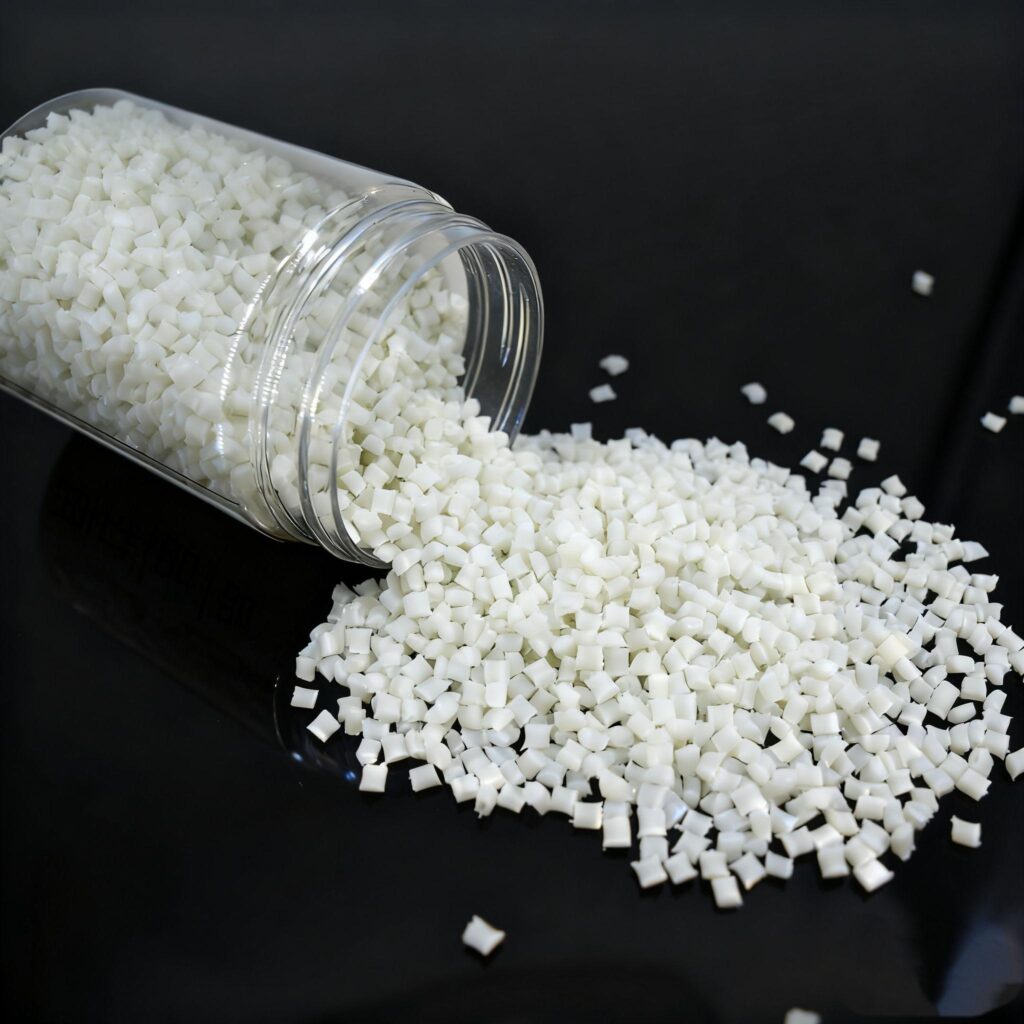
5. Antistatic Additives for PA6 and PA66
Polyamide (PA), commonly known as nylon, is used in engineering components, electrical parts, automotive applications, and industrial products.
PA6 and PA66 differ in molecular structure, melting behavior, and processing requirements.
Nylon also absorbs moisture from the surrounding environment. Moisture can influence its mechanical properties, dimensions, and electrical behavior. Excessive moisture during melt processing can contribute to hydrolytic degradation.
When selecting an antistatic additive for PA, consider:
- Whether the material is PA6 or PA66
- The exact resin grade and reinforcement level
- Moisture conditioning and drying requirements
- Compatibility and dispersion
- Mechanical properties
- Electrical performance at specified humidity levels
A formulation should be evaluated under defined test conditions so that the effects of humidity can be distinguished from the effects of the additive itself.
6. What About PET and Other Engineering Plastics?
PET and other engineering plastics may require specialized antistatic solutions depending on the application and processing method.
For PET, the selection process differs between films, sheets, fibers, and injection-molded products.
Film applications may prioritize transparency, haze, surface uniformity, winding behavior, and downstream converting performance. Molded products may place greater emphasis on electrical properties, mechanical performance, dimensional stability, and finished-part appearance.
The exact PET grade, processing conditions, and additive compatibility must be verified before recommending a product.
Other polymers may also require their own formulation and validation process.
7. Permanent Antistatic Additives vs. Other Antistatic Technologies
Not all antistatic products work in the same way.
Conventional Migratory Antistatic Agents
Some conventional additives migrate toward the polymer surface and help reduce static buildup.
Their performance may depend on temperature, humidity, storage time, surface migration, and formulation.
Polymeric Permanent Antistatic Additives
Certain polymeric antistatic materials are designed to provide longer-lasting static control when properly formulated and processed.
Their performance depends on the additive chemistry, compatibility with the host polymer, loading level, processing conditions, and intended application.
The term “permanent” should not be interpreted as a guarantee of unlimited performance under all conditions. Durability must be demonstrated through appropriate testing.
Conductive Fillers
Conductive carbon black, carbon nanotubes, and other conductive materials may be used when a particular electrical performance is required.
However, they may affect color, transparency, mechanical properties, or processing behavior.
The appropriate technology depends on the application, the electrical target, and the properties that must be preserved.
8. A Practical Checklist for Selecting an Antistatic Additive
Before recommending a product, gather the following information from the customer.
1. Base polymer: PP, PE, ABS, PC, PA6, PA66, PET, or another material.
2. Exact grade: Include the resin grade and whether it is reinforced, modified, blended, or already compounded.
3. Product type: Film, injection-molded part, sheet, container, housing, or another product.
4. Processing method: Injection molding, extrusion, film production, or another process.
5. Electrical target: Required surface resistivity, charge decay, or other electrical specification.
6. Test conditions: Test method, temperature, relative humidity, and conditioning time.
7. Appearance requirements: Natural color, transparency, color limits, haze, and surface quality.
8. Mechanical requirements: Impact strength, tensile properties, stiffness, flexibility, or other relevant characteristics.
9. Processing constraints: Drying requirements, processing temperature, residence time, and production stability.
10. End-use and compliance requirements: Durability, environmental conditions, and any relevant regulatory or customer specifications.
These details help narrow down suitable candidates and reduce unnecessary formulation trials.
9. Why Testing Is Essential
A product data sheet is a starting point, not a substitute for validating the final formulation.
A suitable evaluation may include:
- Surface resistivity or other electrical testing
- Testing under relevant temperature and humidity conditions
- Mechanical-property testing
- Processing and molding trials
- Color, transparency, and surface-quality checks
- Durability testing where required
The test plan should reflect the actual application and the customer’s acceptance criteria.
A formulation should not be considered successful based on a single electrical result if it fails to meet other essential requirements.
Conclusion
Selecting permanent antistatic additives requires a polymer-specific approach.
PP, PE, ABS, PC, PA, and PET differ in compatibility, processing conditions, moisture behavior, mechanical properties, and appearance requirements. These differences can influence the performance of an antistatic additive.
The most reliable approach is to identify the exact polymer grade, understand the processing method, define the electrical target, and validate the complete formulation under relevant conditions.
The right antistatic additive is not simply the one that works in a plastic. It is the one that meets the electrical, processing, mechanical, and appearance requirements of the specific application.