
Introduction
Choosing the right antistatic materials for electronic trays and plastic returnable bins is essential for protecting sensitive electronic components from electrostatic discharge (ESD). The materials must provide suitable electrical performance, good processability, and long-term antistatic properties to meet the requirements of electronics manufacturing and transportation.
1. Application Requirements for Antistatic Electronic Trays and Bins
Although electronic trays and plastic returnable bins are both used for handling electronic components, their requirements can be different.
Electronic Trays
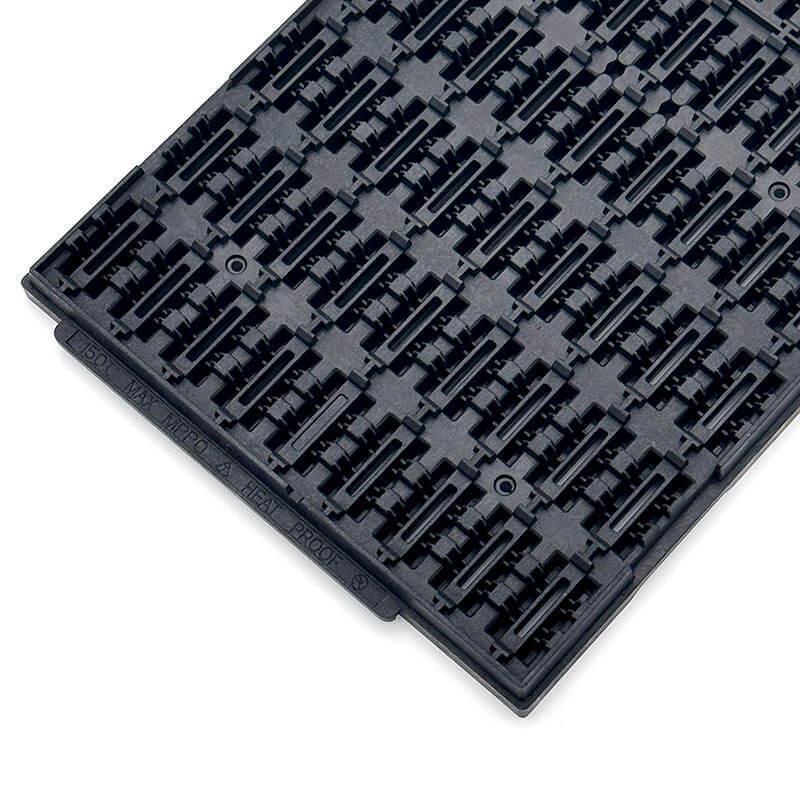
Electronic trays are commonly used to hold and transport semiconductor devices, ICs, connectors, sensors, and other precision electronic components.
Typical requirements include:
- Reliable electrostatic discharge protection
- Dimensional stability and precise cavity design
- Good surface quality
- Low particle generation
- Resistance to repeated handling
- Compatibility with automated production lines
For trays used in semiconductor manufacturing, additional requirements may include heat resistance, cleanliness, and compatibility with specific testing or assembly processes.
Plastic Returnable Bins
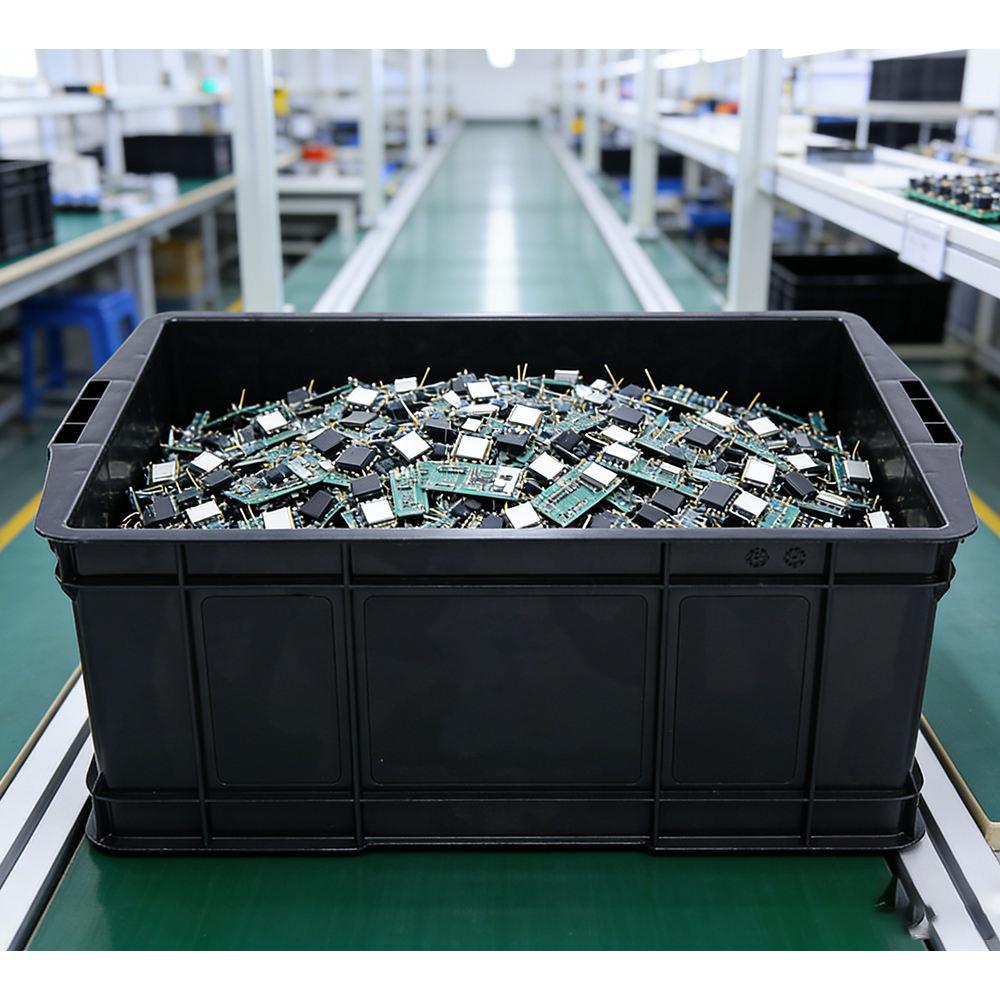
Plastic returnable bins are widely used for the storage and transportation of electronic components, parts, and assemblies.
Their key requirements may include:
- Long-term antistatic performance
- Mechanical strength and impact resistance
- Durability during repeated circulation
- Resistance to cleaning and handling
- Stable performance under different humidity conditions
For reusable containers, maintaining antistatic performance throughout their service life is particularly important.
2. Choosing the Right Base Resin: PS, PET, PP, and ABS
The base resin determines many of the material’s mechanical, thermal, and processing properties.
Common materials used for electronic trays and plastic bins include PS, PET, PP, and ABS.
PS (Polystyrene)
PS is widely used in electronic trays because of its good processability and dimensional stability.
It is suitable for applications where cost efficiency and precise tray design are important.
Antistatic PS materials can be developed using appropriate antistatic additives or other ESD technologies.
PET (Polyethylene Terephthalate)
PET is commonly used in thermoformed electronic trays.
Its advantages include good transparency, surface quality, and formability.
PET trays are often selected when visual inspection of components is required.
However, the material must be evaluated for cavity-wall thinning, mechanical strength, and the specific temperature conditions of the application.
PP (Polypropylene)
PP is widely used in plastic returnable bins because of its good chemical resistance, toughness, and durability.
It is suitable for reusable containers and applications requiring repeated handling.
With appropriate PP antistatic additives, PP can be developed for electrostatic protection.
ABS (Acrylonitrile Butadiene Styrene)
ABS offers a good balance of impact resistance, rigidity, and processability.
It can be considered for electronic trays and containers that require a combination of mechanical performance and ESD protection.
Appropriate ABS antistatic additives can help achieve the required electrical performance, depending on the application and processing conditions.
3. Electrical Performance Requirements for ESD Materials
Not all antistatic materials provide the same level of electrostatic protection.
Surface resistivity is one of the important parameters used to evaluate the electrical performance of ESD materials.
Typical reference ranges include:
| Electrical classification | Typical surface resistivity |
|---|---|
| Conductive | Below 10⁴ Ω/sq |
| Dissipative | Approximately 10⁴–10¹¹ Ω/sq |
| Insulative | Generally above 10¹¹ Ω/sq |
These ranges are indicative only. Classification limits and acceptance criteria may vary according to the applicable standards and customer specifications.
For many electronic handling applications, dissipative materials are preferred because they can help control charge accumulation without causing excessively rapid discharge.
However, the required electrical performance should always be determined by the application.
For example:
- Sensitive electronic components may require controlled charge dissipation.
- Semiconductor manufacturing may require specific ESD and cleanliness standards.
- General electronic storage may have different electrical and mechanical requirements.
It is important to distinguish between antistatic, dissipative, and conductive materials rather than treating them as interchangeable terms.
4. Permanent Antistatic Additives vs. Traditional Solutions
Traditional antistatic additives often work through migration to the material surface.
Their performance may be affected by humidity, surface contamination, cleaning, and the passage of time.
For electronic trays and reusable plastic bins, these factors may lead to inconsistent performance during long-term use.
Permanent antistatic additives offer an alternative approach.
Depending on the polymer system and formulation, they can provide more durable antistatic performance without relying on continuous migration to the surface.
Potential advantages include:
- More stable antistatic performance
- Reduced dependence on environmental humidity
- Lower risk of surface blooming
- Better suitability for long-term applications
- Compatibility with injection molding or extrusion processes, depending on the resin and formulation
However, permanent antistatic performance is not automatic. The additive must be compatible with the base resin, and the final material must be tested under the intended conditions.
5. Processing Methods: Thermoforming vs. Injection Molding
The manufacturing process also affects material selection.
Thermoforming
Electronic trays are often manufactured through thermoforming.
The material must provide suitable sheet properties, forming behavior, and electrical performance after forming.
The antistatic formulation should be evaluated to ensure that the required performance is maintained across the tray, including its formed cavities.
Injection Molding
Plastic returnable bins are commonly produced by injection molding.
The material should provide suitable flowability, mechanical strength, dimensional stability, and antistatic performance.
For permanent antistatic additives, the recommended loading level and processing conditions should be determined through formulation development and testing.
6. Evaluating Long-Term Antistatic Performance
Selecting an antistatic material based only on its initial surface resistivity may not be sufficient.
For reusable electronic trays and plastic returnable bins, long-term performance is equally important.
Manufacturers should consider:
- Surface resistivity under different humidity conditions
- Performance after repeated handling
- Resistance to cleaning or washing
- Mechanical durability
- Surface appearance
- Compatibility with the intended resin and process
Testing should be conducted under conditions that reflect the actual application.
Conclusion
Choosing the right antistatic material for electronic trays and plastic returnable bins requires a comprehensive evaluation of electrical performance, mechanical properties, processing methods, and service conditions.
PS, PET, PP, and ABS can all be considered, depending on the specific application.
For manufacturers seeking durable electrostatic protection, permanent antistatic additives may provide an effective solution when properly formulated and validated.
At BOMAN, we focus on permanent antistatic additives for plastic applications, helping manufacturers explore suitable material solutions for different polymers and processing requirements.
Looking for a suitable antistatic solution for your electronic trays or plastic returnable bins?
Contact BOMAN to discuss your resin type, processing method, and target surface resistivity.