
Introduction
The 85/85 test is an accelerated damp heat test used to evaluate the environmental reliability of materials and products. For permanent antistatic plastics, it helps determine whether surface resistivity and other relevant properties remain stable after prolonged exposure to high temperature and humidity.
In the plastics industry, permanent antistatic performance is important for applications such as electronic packaging, semiconductor components, automotive plastics, and industrial plastic parts.
1. What Is the 85/85 Test?
The 85/85 test is an accelerated damp heat test in which a material or product is exposed to:
- Temperature: 85°C
- Relative Humidity: 85% RH
- Test Duration: Depending on the testing specification, commonly 168, 504, or 1,000 hours in relevant accelerated testing programs.
The purpose is to evaluate how materials perform under elevated temperature and humidity conditions.
This test is commonly associated with reliability evaluation in the electronics industry.Relevant test methods include IEC 60068-2-67, which addresses accelerated damp heat testing under specified temperature and humidity conditions.
For plastic materials, it can also help assess whether exposure to damp heat affects their physical, electrical, or functional properties.
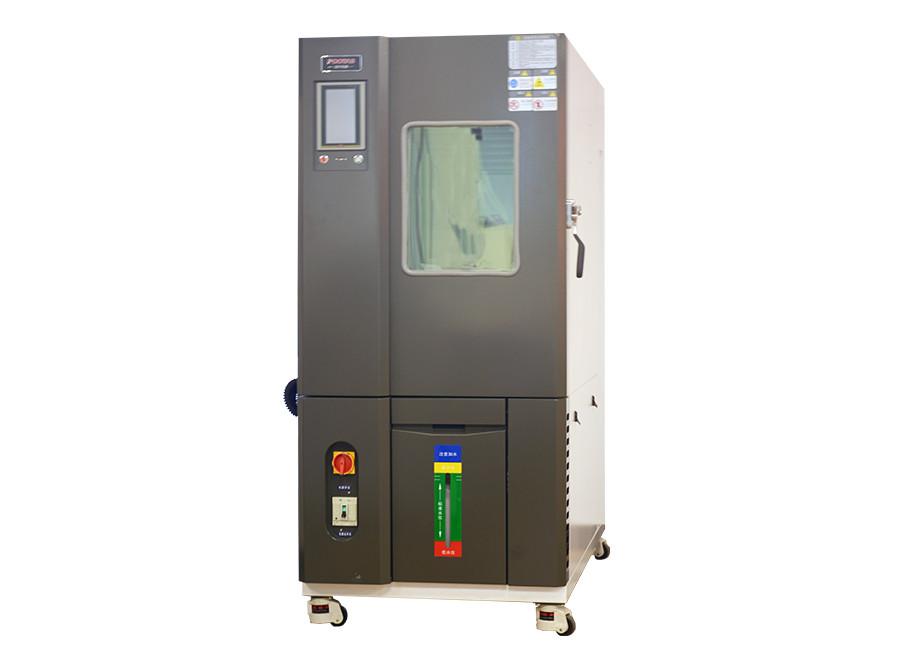
85/85 Damp Heat Test Chamber
2. Why Is the 85/85 Test Important for Antistatic Plastics?
For permanent antistatic plastics, maintaining stable surface resistivity is essential.
A material may show good antistatic performance under standard laboratory conditions, but its performance may change after prolonged exposure to high temperature and humidity.
The 85/85 test helps evaluate several important aspects.
2.1 Stability of Surface Resistivity
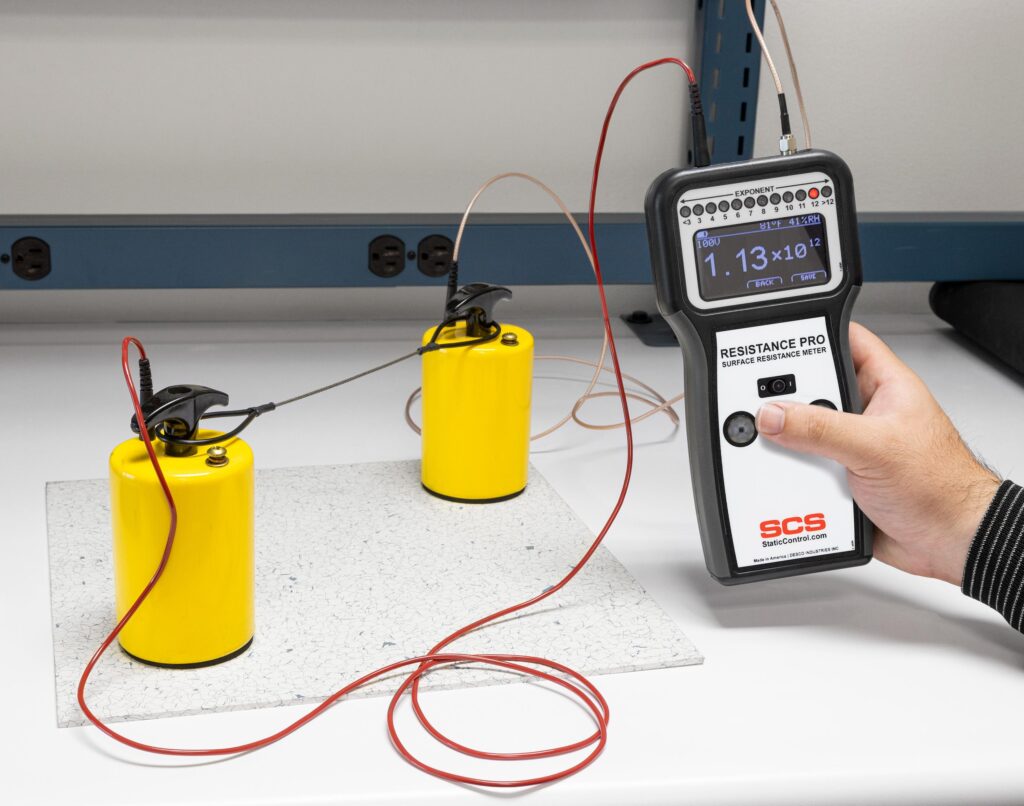
Surface resistivity is one of the key indicators used to evaluate the antistatic performance of plastics.Surface resistivity measurements can be conducted using appropriate methods such as ASTM D257, depending on the material and testing requirements.
By measuring surface resistivity before and after the 85/85 test, we can determine whether the material’s electrical properties remain relatively stable after damp heat exposure.
A significant change in surface resistivity may indicate that the material’s antistatic performance is sensitive to environmental conditions.
2.2 Resistance to High Temperature and Humidity
High temperature and humidity can affect polymer materials and their additives.
Depending on the resin system and additive formulation, these conditions may influence:
- Polymer properties
- Additive distribution and compatibility
- Moisture absorption
- Electrical performance
The 85/85 test provides useful information about how a material responds to these environmental stresses.
2.3 Reliability of Antistatic Performance
For electronic packaging and industrial plastic components, stable antistatic performance is often more important than achieving a low initial surface resistivity.
Comparing the electrical properties before and after environmental conditioning helps manufacturers better understand the reliability of their materials.
3. How Is the 85/85 Test Conducted for Antistatic Plastics?
A typical evaluation process includes the following steps:
Step 1: Prepare the Samples
Prepare plastic specimens using the specified resin, additive concentration, and processing conditions.
Step 2: Measure Initial Surface Resistivity
Measure and record the initial surface resistivity under controlled testing conditions.
Step 3: Conduct the 85/85 Test
Place the specimens in a temperature and humidity chamber at 85°C and 85% RH for the specified duration.
Step 4: Condition the Samples
After exposure, follow the agreed recovery and conditioning procedure before electrical measurements.
Step 5: Measure Surface Resistivity Again
Measure the surface resistivity using the same method and comparable environmental conditions.
Step 6: Compare the Results
Compare the initial and final measurements to evaluate changes in electrical performance.
The measurement method, electrode configuration, conditioning procedure, and acceptance criteria should be defined in advance.
4. Does Passing the 85/85 Test Mean an Antistatic Additive Is Permanent?
Not necessarily.
This is an important distinction.
The 85/85 test evaluates material performance under specified damp heat conditions. It does not independently prove that an antistatic additive will remain effective throughout the entire service life of a plastic product.
For example, some conventional antistatic additives rely on migration to the material surface and may be affected by environmental conditions.
Permanent antistatic systems, such as polymer-based antistatic additives, are designed to provide more durable antistatic performance through a different material mechanism.
However, their actual performance still depends on:
- Polymer compatibility
- Additive concentration
- Processing conditions
- Environmental exposure
- Application requirements
Therefore, the 85/85 test should be considered one part of a broader performance evaluation.
Additional tests, such as washing resistance, low-humidity performance, and long-term aging, may be necessary depending on the application.
5. What Should You Look for When Evaluating Antistatic Plastics?
When selecting an antistatic material, we recommend evaluating more than its initial surface resistivity.
Consider the following factors:
| Evaluation Item | What It Tells You |
|---|---|
| Initial surface resistivity | Initial antistatic performance |
| 85/85 test | Stability under specified damp heat conditions |
| Washing resistance | Resistance to performance loss after washing |
| Low-humidity testing | Antistatic performance in dry environments |
| Long-term aging | Performance changes over extended exposure |
| Processing compatibility | Suitability for injection molding or extrusion |
Different applications require different performance criteria. Testing conditions and acceptance limits should always be selected according to the actual product requirements.
Conclusion
The 85/85 test is a useful tool for evaluating the environmental stability of antistatic plastics.
It helps manufacturers understand whether surface resistivity and other relevant properties remain stable after exposure to high temperature and humidity.
However, passing the 85/85 test alone does not prove permanent antistatic performance under all conditions.
A comprehensive evaluation should combine environmental aging, electrical testing, washing resistance, and application-specific performance testing.
At BOMAN, we believe that reliable antistatic materials should deliver more than good initial test results. They should provide stable and consistent performance under the conditions in which the final products are actually used.
Looking for a permanent antistatic solution for PP, PE, ABS, PC, or other engineering plastics?
Contact BOMAN to discuss your resin system and antistatic requirements.