
Introduction
Static electricity is a common challenge in plastics, textiles, packaging, electronics, and many other industries. It can cause dust attraction, material sticking, handling difficulties, and, in certain environments, electrostatic discharge (ESD) risks.
Antistatic agents are used to reduce the buildup or accumulation of static charges. However, not all antistatic agents work in the same way, and different materials and applications require different solutions.
Understanding the main types of antistatic agents is the first step toward selecting the right product.
1. What Are Antistatic Agents?
Antistatic agents are substances or materials designed to reduce the accumulation of electrostatic charges on or within a material.
Depending on their composition and application method, they may work by increasing surface charge dissipation, modifying surface properties, or introducing a polymer phase that helps dissipate static charges.
The appropriate solution depends on several factors, including the base material, processing method, required electrical performance, environmental conditions, and expected service life.
2. Classification by Application Method
One common way to classify antistatic agents is according to how they are applied.
2.1 Internal Antistatic Additives
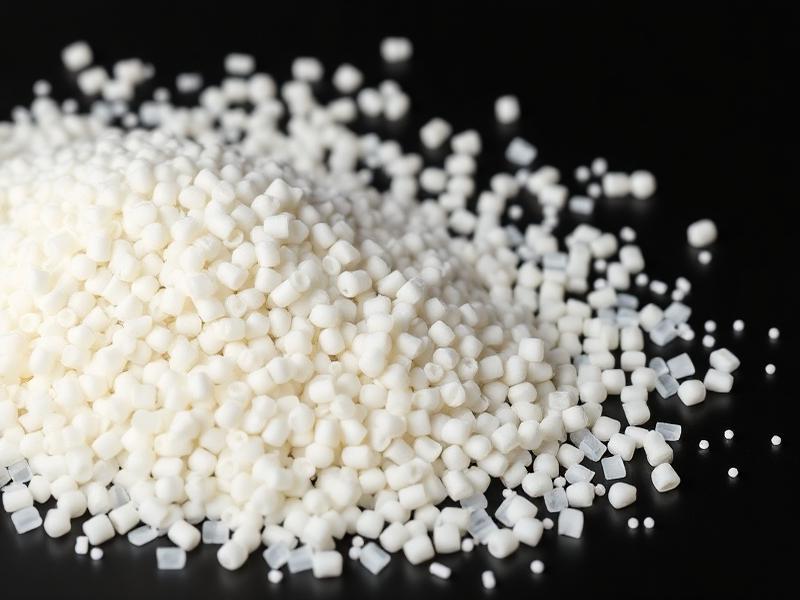
Internal antistatic additives are incorporated into a polymer during compounding or plastic processing.
They are commonly used in plastic products made from materials such as PP, PE, ABS, and other polymers, depending on the additive’s compatibility and formulation.
Their performance depends on the chemical structure of the additive, its compatibility with the polymer, the loading level, processing conditions, and the final product design.
Internal additives may be suitable for applications where antistatic performance is required throughout the useful life of a plastic product.
2.2 External Antistatic Treatments
External antistatic treatments are applied to a material’s surface through methods such as spraying, dipping, wiping, or coating.
They are used in applications such as textile finishing, plastic films, and surface treatments.
These treatments can be convenient when the material has already been manufactured. However, their durability depends on the formulation, surface adhesion, abrasion, washing, and other service conditions.
Key difference: Internal additives are incorporated into the material, while external treatments are applied to its surface. Neither approach is universally better; the appropriate choice depends on the application.

3. Classification by Chemical Structure
Antistatic agents can also be classified according to their chemical structure.
Common categories of conventional surfactant-based antistatic agents include:
Cationic antistatic agents: Contain positively charged functional groups and are used in selected applications depending on material compatibility.
Anionic antistatic agents: Contain negatively charged functional groups and are used in certain formulations and surface treatments.
Nonionic antistatic agents: Do not carry a formal ionic charge and are often selected based on their compatibility and surface properties.
Amphoteric antistatic agents: Can exhibit both positive and negative ionic characteristics depending on their chemical structure and surrounding conditions.
These categories are particularly relevant when studying conventional surfactant-based products. Not every modern polymeric antistatic material fits neatly into this classification, so chemical structure should not be confused with application method or durability.
4. Classification by Antistatic Mechanism and Performance
For plastics applications, it is also useful to distinguish between conventional antistatic agents, polymeric antistatic materials, and conductive fillers.
4.1 Conventional Antistatic Agents
Many conventional antistatic agents work by modifying the material’s surface and helping static charges dissipate. Some depend partly on moisture from the surrounding environment.
Their performance can vary with humidity, storage time, washing, and other environmental conditions.
They may be suitable for applications where moderate antistatic performance is sufficient and the treatment’s durability meets the requirements.
4.2 Polymeric Permanent Antistatic Materials
Polymeric antistatic materials use polymeric structures to provide antistatic functionality. Certain polyether-amide and related polymer systems are used in plastic formulations to help dissipate static charges.
Depending on the chemistry and formulation, these materials may provide longer-lasting antistatic performance than conventional low-molecular-weight treatments.
However, the term “permanent” does not mean that performance is unlimited or identical under every condition. Results depend on the base resin, additive loading, processing conditions, humidity, product design, and the test method.
For plastic applications, compatibility with the base polymer and processing stability are particularly important.
4.3 Conductive Fillers
Conductive fillers such as carbon black and carbon nanotubes can be incorporated into polymers to create electrically conductive or static-dissipative materials.
Their mechanism differs from that of conventional surfactant-based antistatic agents.
Conductive fillers are often selected when the application requires a particular electrical performance, conductivity level, or electrostatic discharge protection.
However, they may also affect color, appearance, mechanical properties, processability, and cost.
Important: Antistatic additives and conductive fillers are related technologies, but they are not interchangeable in every application. Selection should be based on the required electrical performance and end-use conditions.

5. How Do You Choose the Right Antistatic Agent?
Before selecting an antistatic product, consider the following questions:
- What is the base material?
PP, PE, ABS, PC, PET, and other polymers have different chemical structures and processing requirements. An additive suitable for one polymer may not work equally well in another.
- What is the processing method?
Injection molding, extrusion, film production, and surface coating involve different processing conditions and product requirements.
- What electrical performance is required?
Clarify whether the goal is to reduce static buildup, achieve a specified surface resistivity, dissipate electrostatic charges, or meet a particular ESD requirement.
- What durability is expected?
Consider storage, repeated handling, washing, abrasion, temperature, humidity, and the expected service life of the product.
- What other properties must be maintained?
Color, transparency, mechanical strength, surface appearance, food-contact requirements, and processing stability may all influence product selection.
A good antistatic solution should meet the electrical requirements while remaining compatible with the material and the intended manufacturing process.
6. Antistatic Performance Is Not the Same as Conductivity
Antistatic materials, static-dissipative materials, and conductive materials are often discussed together, but they are not identical.
They differ in their electrical behavior and the requirements they are designed to meet. Surface resistivity is one commonly used measurement, but a single resistance value cannot establish suitability for every ESD application.
The required performance should be determined by the intended use, applicable standards, and the customer’s technical specifications.
Conclusion
Antistatic agents can be classified by application method, chemical structure, and antistatic mechanism. Each classification provides a different perspective on how these materials work and where they may be used.
For plastic manufacturers, the most important step is to match the antistatic solution to the base resin, processing method, electrical performance requirements, and expected service life.
Understanding these fundamentals makes it easier to compare products, evaluate technical data, and select a suitable antistatic solution for a specific application.